
Black Granite in Israel: Engraving, Letter Painting, Inscription Restoration, and Gold Leaf
The Inscription: the Heart of the Memorial
Black granite is considered one of the most premium materials for stones in Israel. It is chosen for its deep color, dense structure, refined appearance, and durability.
But even the finest stone requires the right approach to lettering. The person's name, the dates of their life, words of remembrance, lines of prayer, or a personal message from the family must be not only beautifully executed but legible for many years to come.
That is why engraving on black granite, letter painting, and subsequent inscription restoration require professional experience, special materials, and strict adherence to technique.
The Main Engraving Methods on Black Granite
Four principal lettering methods are most often used on black granite stones.
Sandblast Engraving
The first and one of the most common methods is sandblast engraving.
A template with the approved text is applied to the surface of the stone. Pressurized sandblasting equipment then cuts the letters into the surface of the stone.
This method produces a neat, legible inscription. On black granite, however, the depth of such engraving is usually fairly shallow, so the subsequent painting must be done with particular care.
If the paint is applied incorrectly or in insufficient quantity, the letters can lose their brightness over time and become less visible.
Machine and Laser Engraving
The second method is machine engraving, where the inscription is applied with specialized equipment or a laser machine.
This approach delivers precise lines, clean letterforms, and intricate decorative elements.
Laser or machine engraving suits black granite well, especially when high detail is needed. But the method has an important nuance: if the cut is not deep enough, future restoration and repainting of the letters become more complicated.
When choosing this method, it is important to think in advance not only about how the stone will look on installation day, but about how it can be maintained years later.
Raised (Negative) Engraving on Black Granite
The third common method is raised (or "negative") engraving.
With this technology, it is not the letter that is cut but the background around it. The letters remain polished and appear to stand above the surface, while the surrounding background becomes matte, grey, and unpolished.
On black granite this method looks especially striking. The contrast between the deep black of the polished letters and the matte grey background makes the inscription prominent and visually three-dimensional.
But raised engraving demands particular care in painting and restoration. If paint reaches the unpolished background, it can spoil the stone's appearance. Removing such marks is extremely difficult, sometimes practically impossible without major intervention.
This is why work on raised engraving on black granite must never be done on one's own. It requires professional materials, proper surface protection, and specialist experience.
Brass Letters on Black Granite
The fourth lettering method is the installation of brass letters.
The letters are fabricated separately and mounted on the surface of the stone.
The main mistake many installers make is simply gluing the letters to the stone. On black granite this approach is especially unreliable, since the polished surface does not hold adhesive well over time.
Under sun, moisture, and temperature swings, the adhesive gradually loses its properties, and the letters can begin to loosen or fall off.
Professional installation is done differently: a dedicated seat is prepared for each letter, special mounts are used, and the letters are then additionally secured with a professional compound.
Bezikaron uses exactly this brass-letter installation technology, which significantly extends the life of the inscription and keeps the stone looking neat.
Painting Letters on Black Granite
Painting letters on black granite has its own particularities.
White, silver, or gold are most often used for these stones. These shades contrast well with the black surface of the stone and make the inscription clearly legible.
Bezikaron uses a special two-component paint resistant to moisture, sunlight, and the Israeli climate.
Before painting, the surface of the letters is thoroughly cleaned and degreased. This is one of the most important steps: without proper preparation, the paint may apply unevenly or begin to peel.
Why Paint Is Applied in Three Coats on Black Granite
Unlike some other types of stone, paint on black granite is applied not in two coats but in three.
The reason is that the engraving on black granite is often quite shallow. For the paint to bond well, deliver dense color, and last longer, staged application is essential.
The first coat fills the surface of the letter and creates the base.
The second coat builds the density of the color.
The third coat seals the result and makes the inscription richer and more durable.
This approach lets the letters retain brightness and crispness longer, even under constant sun, humidity, and precipitation.
Why Brushes Are Better Than Spray
On black granite, professional painting is usually done not with spray cans but with dedicated brushes.
A brush allows precise control over the amount of paint, the depth of application, and the accuracy of filling each letter.
This is especially important when working with fine lines, shallow engraving, and intricate typefaces.
Special lint-free brushes are used. Ordinary household brushes can ruin the work: fibers may remain in the paint after drying, making the inscription look untidy and requiring repeat restoration.
Removing Excess Paint
After painting, it is important to remove the excess correctly from the surface of the stone.
Unprofessional workers often use scrapers or aggressive tools. This approach can damage black granite, leave scratches or chips, or compromise the polish.
Bezikaron uses special products and polishing materials that remove the excess paint without damaging the stone.
After cleaning, the surface is additionally re-polished to preserve the original luster, depth of color, and neat appearance of the stone.
It is precisely this stage that distinguishes professional restoration from ordinary touch-up painting.
Gilding Letters with Gold Leaf
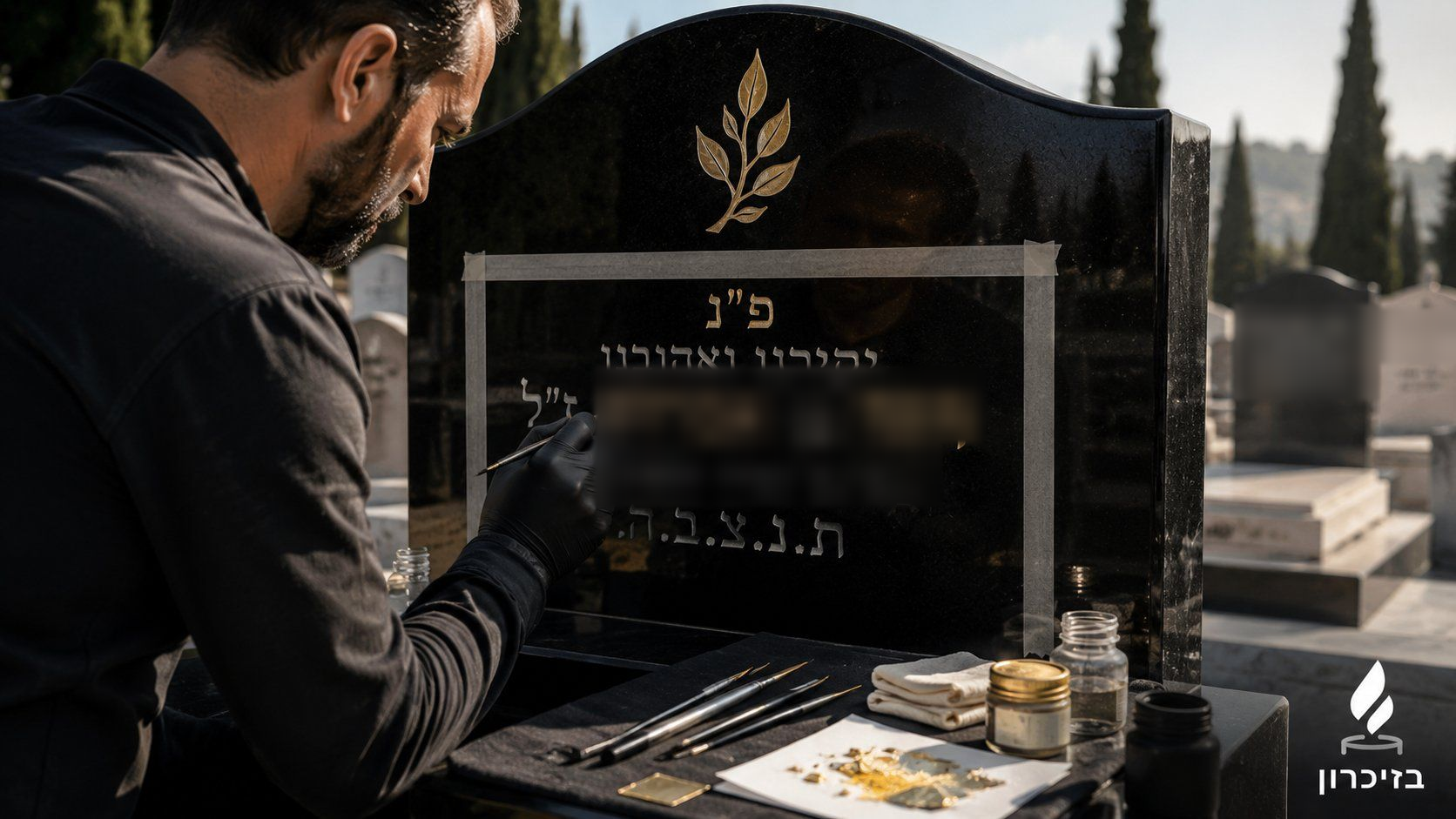
A separate premium method of finishing inscriptions on black granite is gold leaf.
This is a more expensive and rarer technology, used mainly for high-end stones or bespoke commissions.
Genuine gold leaf is used: the same kind employed in restoration work and the jewelry trade.
The process begins with complete cleaning and degreasing of the letters. A special compound is then applied to the prepared surface to bond the gold leaf.
The specialist then carefully lays the sheet of gold leaf and gradually works it into the structure of the engraving. The work proceeds in several stages so that the gold sets evenly inside the letters.
A special protective lacquer is then applied, fixing the gold leaf and helping preserve it for many years.
This method gives the stone an especially expressive, luxurious appearance. The inscription looks deep and noble and contrasts beautifully with the black granite.
Bezikaron offers this service, though due to its high cost it is used infrequently.
Restoring Inscriptions on Black Granite
Over time, even well-executed letters can lose their richness.
The Israeli climate plays its part: strong sun, humidity, precipitation, sea air, and temperature swings.
Restoring inscriptions on black granite includes cleaning the letters, degreasing, reapplying paint in several coats, removing the excess, and final polishing of the surface.
In the case of brass letters, the specialists can carefully remove the elements, clean their seats, restore the letters, and reinstall them with the correct fastening technology.
A Professional Approach to Engraving and Letter Painting
Black granite is a premium material that demands careful, professional work.
Sandblast engraving, machine engraving, raised engraving, and brass letters can all look very dignified, if executed correctly from the start and maintained professionally.
Painting letters on black granite must include mandatory degreasing, application of a special two-component paint in three coats, the right brushes, delicate removal of excess paint, and final polishing.
Bezikaron uses professional technologies for restoring and painting inscriptions on black granite stones in Israel. This approach preserves the crispness of the letters, the depth of color, the luster of the stone, and the dignified appearance of the stone for years to come.