
Hebron Stone: What It Is, Why It Deteriorates, and How Modern Restoration Works
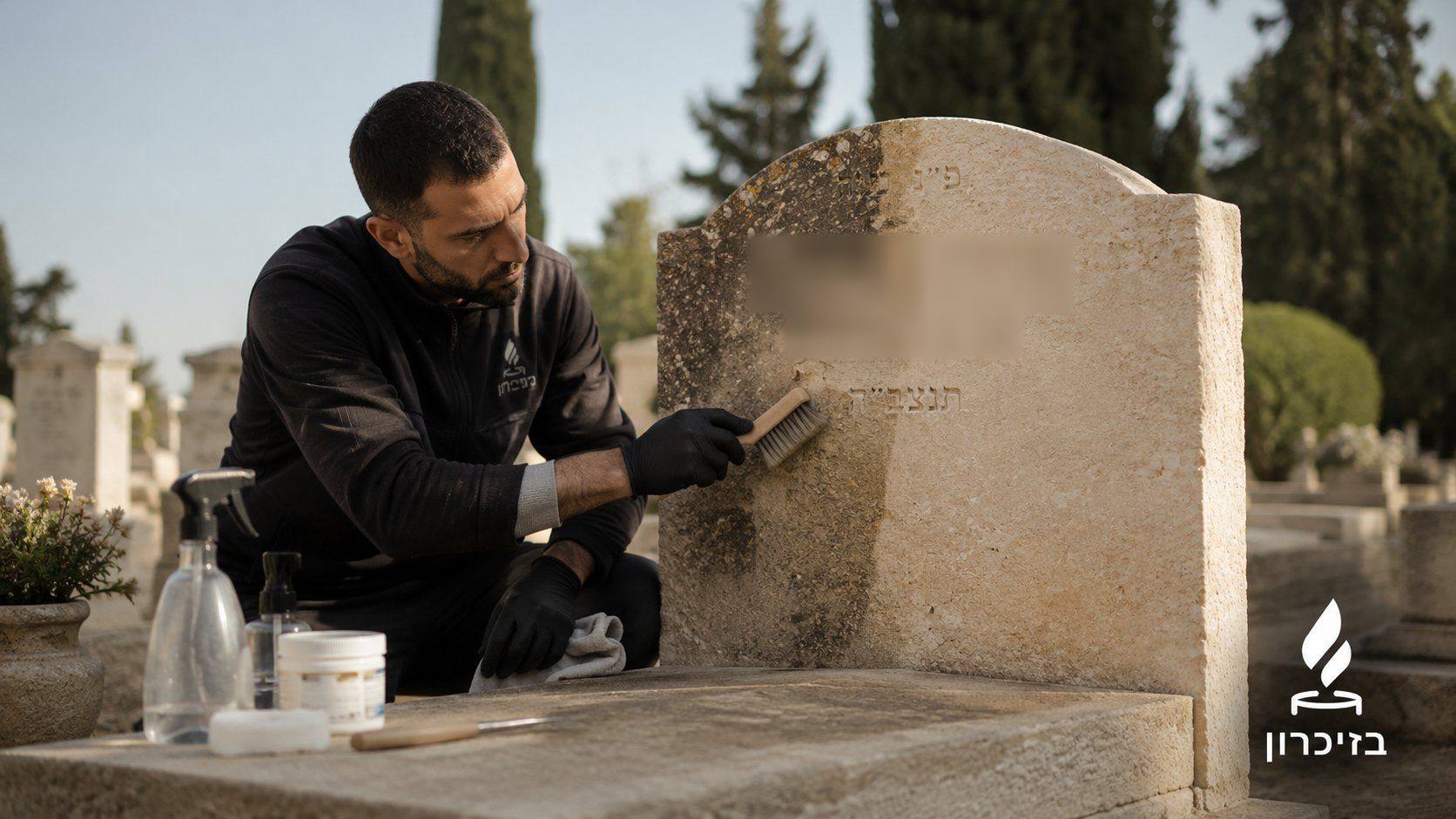
Hebron stone is one of the most widely used stones in Israel. This natural limestone is quarried in the Hebron and Jerusalem area, and for many decades it has been the traditional choice for stones and memorial structures at Jewish sites across the country.
Hebron stone is known for its warm beige, grey-beige, and softly golden tones. If you have ever visited a site in Israel, or seen photos of a family member's plot there, this is almost certainly the stone you remember. Its natural color blends harmoniously into the Israeli landscape and gives these memorials their distinctive, instantly recognizable appearance.
Yet despite its strength and durability, Hebron stone has particular characteristics that must be taken into account both when a stone is made and throughout the years that follow.
What Makes Hebron Stone Different
Hebron stone belongs to the limestone family and is considered a fairly dense natural material. Its structure, however, is naturally porous, a quality that is both its charm and its weakness.
Because of this porosity, the stone absorbs moisture, plant pollen, organic particles, and various biological contaminants. The process is especially active at sites, where plots often sit close to trees, shrubs, and flowers.
Over time, microorganisms, fungi, and other biological growth penetrate the pores of the stone. They develop inside the material itself, gradually eroding the surface. As a result, the stone darkens, loses its original color, and becomes covered with visible signs of biological damage.
Why Hebron Stones Need Professional Care
Caring for Hebron stone requires specialized knowledge and experience. Ordinary washing with water removes only surface dirt, while the underlying deterioration continues inside the structure of the stone.
This is why stone cleaning in Israel must account for the local climate, the type of stone, and the specific nature of the contamination, something especially important to understand for families living abroad, who cannot inspect the plot in person.
Over more than four years of work, the specialists at Bezikaron have restored over 35,000 stones throughout Israel. In our experience, roughly 65% of all stones requiring professional attention are made entirely of Hebron stone or include elements of it.
This accumulated experience has allowed us to study in detail how this material ages and to develop our own technologies for restoring and protecting it.
A Multi-Stage Cleaning Technology
Professional stone cleaning begins with a thorough assessment of the stone's condition. After this diagnosis, the surface receives an initial cleaning to remove dirt and biological growth.
The next stage is the application of a specialized chemical treatment developed specifically for limestone. The compound penetrates deep into the pores of the stone and acts on the fungi, microorganisms, and other biological growth that ordinary washing simply cannot reach.
After the required dwell time, the treatment is removed along with the broken-down contaminants. This approach cleans not only the surface of the stone but its internal structure as well.
Restoring a Hebron Stone
Restoring a Hebron stone calls for a tailored approach, since different areas of the surface may show different degrees of damage and different original finishes.
Stones leave the workshop with both polished elements and deliberately rough-hewn decorative sides. It is precisely these textured surfaces that are most vulnerable to moisture, contamination, and biological processes.
These areas are where dark staining, erosion, and breakdown of the stone's upper layer most often appear.
Hebron stone responds well to restoration and resurfacing, but the work must be carried out only with precisely graded abrasives. Deviating from the correct technique can damage the structure of the stone and open up additional pores.
Bezikaron's specialists use a multi-stage resurfacing system that restores the stone's appearance, levels the surface, and partially seals the stone's pores in preparation for protective treatment.
Protecting the Stone After Restoration
The final stage of restoration is protecting the surface with specialized sealants.
After cleaning and resurfacing, a protective sealer, refined by our specialists specifically for porous limestone, is applied to the stone.
The sealer penetrates deep into the structure of the stone, fills its pores, and creates a barrier against moisture, fungi, and other biological organisms.
Its active components continue working inside the stone long after application, addressing any residual pockets of contamination or biological damage that may remain deep within the material.
This approach significantly extends the life of the stone and greatly reduces the likelihood of erosion returning.
Preserving Memory for Years to Come
Hebron stone is rightly considered one of the symbols of Israel's stone-craft tradition. Its natural beauty, warm tones, and durability have made it one of the most sought-after materials for stones.
To preserve its original appearance for decades, however, a plot needs regular professional care: timely cleaning and quality surface protection.
Modern restoration technology makes it possible not only to return a stone to a dignified appearance, but to protect it from further deterioration, honoring the memory of your family for many years to come, even when you cannot be there yourself.